Category: Product

product related topics

  • a short history of almost every machine

    a short history of almost every machine

    [av_heading heading=’a short history’ tag=’h3′ link_apply=” link=’manually,http://’ link_target=” style=’blockquote modern-quote modern-centered’ size=’50’ subheading_active=’subheading_below’ subheading_size=’15’ margin=” padding=’10’ color=’custom-color-heading’ custom_font=’#4fafdb’ custom_class=” id=” admin_preview_bg=” av-desktop-hide=” av-medium-hide=” av-small-hide=” av-mini-hide=” av-medium-font-size-title=” av-small-font-size-title=” av-mini-font-size-title=” av-medium-font-size=” av-small-font-size=” av-mini-font-size=”]
    of almost every machine
    [/av_heading]

    [av_hr class=’default’ height=’50’ shadow=’no-shadow’ position=’center’ custom_border=’av-border-thin’ custom_width=’50px’ custom_border_color=” custom_margin_top=’30px’ custom_margin_bottom=’30px’ icon_select=’yes’ custom_icon_color=” icon=’ue808′ av_uid=’av-4bp3vn’]

    [av_image src=’http://ideci.nl/wp-content/uploads/2020/12/TechnologyHistory.png’ attachment=’1908′ attachment_size=’full’ align=’center’ styling=” hover=’av-hover-grow’ link=” target=” caption=” font_size=” appearance=” overlay_opacity=’0.4′ overlay_color=’#000000′ overlay_text_color=’#ffffff’ copyright=” animation=’no-animation’ av_uid=’av-kirtrke4′ id=” custom_class=” admin_preview_bg=”][/av_image]

    [av_textblock size=” font_color=” color=” av-medium-font-size=” av-small-font-size=” av-mini-font-size=” av_uid=’av-kirv0eye’ id=” custom_class=” admin_preview_bg=”]

    The history of this earth, and everything that lives upon it, really does fascinate me enormously.

    After all, to understand the present you have to know the past.

    What is in the past, serves as a context for the present, and what is in the future. Well-known titles such as ‘Homo Sapiens’ (Yuval Noah Harari), ‘a small history of almost everything’ (Bill Bryson) or less well-known such as ‘in Europe’ (Geert Mak) and ‘Spiegelzee’ (Salomon Kroonenberg), help me to view the world around me from a new perspective.

    Let me make a small contribution as well: a short history of almost all machines. Actually a sequel to ‘The Genesis of Technology’. This story is actually inevitable, since Homo Sapiens is primarily a Homo Ingenerare: the creating human.

    Technology and humanity have been inextricably linked since the use of the stick and fire as tools. Tools, technology, to make life easier for humans. ‘Technology serves humanity’ since … time immemorial. Although nowadays it seems way to often that actually it is us humans serving technology … every time a device or machine claims our attention by putting out a ‘ping’ sound.

    Along with the development of humans and the society we live in, the tools and machines we use have developed as well. In fact, it’s the other way around:

    it is the tools and machines that enable the development of our society

    … and yes … it all started with a stick and fire. The fist axe came soon after. It was discarded when someone thought that things became a lot easier when you attached a handle to it: the axe was born. Hand tools helped humanity to survive through pre-history. And you can bet that it contributed to the migration of mankind across the globe.

    Try killing a mammoth with your bare fists.

    Now imagine that, as a pre-historic farmer, you are fed up with all that plowing in your field with your hand plow. . . and you come up with the bright idea to whip up your domesticated cow and make it pull the plough. Welcome to antiquity!

    The diagram above this article shows how every tool and machine that mankind has invented ever since, consists of the same elements:

    • Supporting structure: a frame or structure that keeps the tool in place
    • Tool: the tool that actually performs the function
    • Force conversion: the transmission of a force to the tool, e.g. by means of leverage
    • Drive: what drives the tool
    • Energy distribution: what supplies energy to the drive
    • Energy generation: what generates energy for the drive
    • Basic control: simple control tasks such as start and stop, open and close
    • Procedural control: timed, combined control tasks such as starting and stopping at the right time depending on changes in the surroundings
    • Coordinate control: more complex logistics control tasks such as planning and routing

    The plough consists of the plough share (tool) and a draw bar (supporting structure & force conversion). The ox provides the drive by putting its muscles to work (energy generation & distribution) in such a way that it and the team move forward. The farmer is responsible for starting, stopping and steering (basic control) of the entire assembly. But also to do this in the right order (procedural control), such that it starts before it is steered. He also determines how the field will be ploughed and whether the furrows will be drawn in north-south or east-west direction (coordinate control).

    You will find the same elements in a modern, GPS-controlled plough. Its function and working principle has not changed over the centuries. What does change, is the technology that is being used. Wind and water energy was used in the Middle Ages. The industrial revolution in the 19th century brought the more powerful mechanical steam engines, and in the early 20th century the more efficient electric drive system took its place.

    The invention of the computer, in the mid-20th century, made it possible that the more complex control tasks can also be done by the machine itself. More and more, the human operator is being replace by software.

    The only reason for applying all these new technologies lies in the so-called ‘non-functional’ requirements. We still want the same function, but now faster, more reliable, more flexible, more maintenance-friendly, more compact, cheaper, etc.

    OK. All sounds logical, right?

    Still …. with many machine builders it seems to be mainly about the mechanical part.

    Perhaps that’s because that part contains the most material costs? Or because mechanical engineering is the first to start with the design? Or because the ERP system only contains a mechanical Bill Of Materials? Or because most of the space in the assembly hall is occupied by the mechanical parts?

    You could say that these companies got stuck in the 1st industrial revolution. And to think that we have now reached the 4th industrial revolution! As said, to understand the present you have to know the past. If one does, then the current trend towards the future is very clear and. . . understandable.

    The fourth revolution is not driven by developments in the field of mechanics. It is electronics (data networks, wireless communication, etc.) and software (AI smart algorithms, etc.) that make things possible. . . that your competitors can’t do yet.
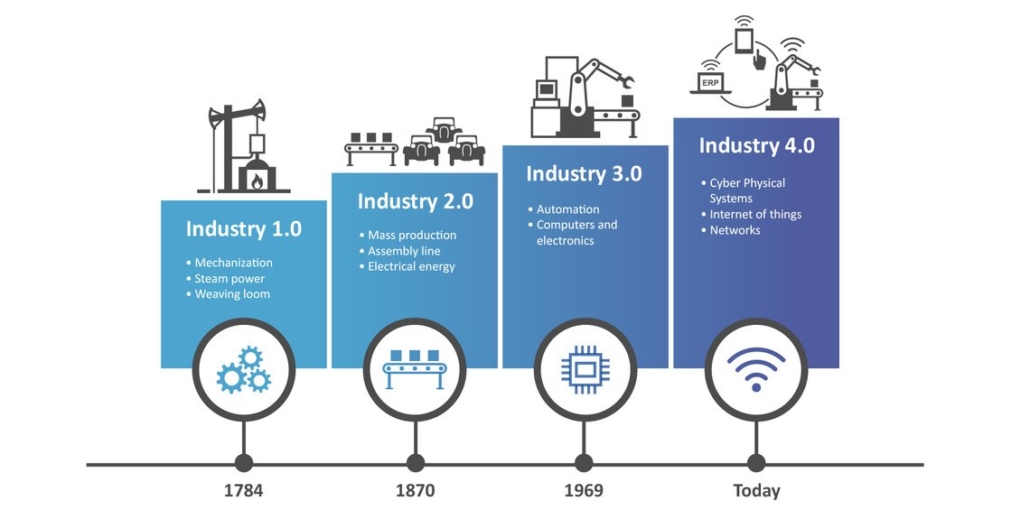
    The classic way of engineering, in which mechanical engineering is leading and electrical engineering and software are subordinated to it, is not the way to exploit the possibilities of the 4th industrial revolution. All disciplines must work together in a mechatronic, multi-disciplinary approach to translate the functional and non-functional requirements into a solution that remains competitive.

    It must be realized that developments in the software field are moving much faster than those in the mechanical and electrical engineering field.

    The limiting factor is not in the technological possibilities but in the speed with which your company adapts.

    And that, in turn, is determined by the speed with which your employees can adapt … so it will take a few years. Do you have the people to do that?

    Digitisation! Standardisation! Smart Industry! Digital Twin! Nice slogans that you come across in every Industry 4.0 folder. But what does that mean for your company, on the shop floor, in the engineering department?

    Would you like to discuss / brain storm on these matters? Get in touch!
    [/av_textblock]

    [av_social_share title=’Share this entry’ style=” buttons=” share_facebook=” share_twitter=” share_whatsapp=” share_pinterest=” share_reddit=” share_linkedin=” share_tumblr=” share_vk=” share_mail=” av-desktop-hide=” av-medium-hide=” av-small-hide=” av-mini-hide=” av_uid=’av-2y7zib’]

  • Modularity for dummies, last part … I think

    Modularity for dummies, last part … I think

    [av_heading heading=’Modularity for dummies, last part … I think’ tag=’h3′ link_apply=” link=’manually,http://’ link_target=” style=’blockquote modern-quote modern-centered’ size=’50’ subheading_active=” subheading_size=’15’ margin=” margin_sync=’true’ padding=’10’ color=’custom-color-heading’ custom_font=’#4fafdb’ av-medium-font-size-title=” av-small-font-size-title=” av-mini-font-size-title=” av-medium-font-size=” av-small-font-size=” av-mini-font-size=” av_uid=’av-kh4we9cy’ id=” custom_class=” admin_preview_bg=”][/av_heading]

    [av_hr class=’default’ height=’50’ shadow=’no-shadow’ position=’center’ custom_border=’av-border-thin’ custom_width=’50px’ custom_border_color=” custom_margin_top=’30px’ custom_margin_bottom=’30px’ icon_select=’yes’ custom_icon_color=” icon=’ue808′ av_uid=’av-6zjgi3′]

    [av_image src=’http://ideci.nl/wp-content/uploads/2018/04/art-of-the-brick.jpg’ attachment=’1468′ attachment_size=’full’ align=’center’ styling=” hover=’av-hover-grow’ link=” target=” caption=” font_size=” appearance=” overlay_opacity=’0.4′ overlay_color=’#000000′ overlay_text_color=’#ffffff’ animation=’no-animation’ admin_preview_bg=” av_uid=’av-6dff3f’][/av_image]

    [av_textblock size=” font_color=” color=” av-medium-font-size=” av-small-font-size=” av-mini-font-size=” av_uid=’av-4p4f8b’ id=” custom_class=” admin_preview_bg=”]
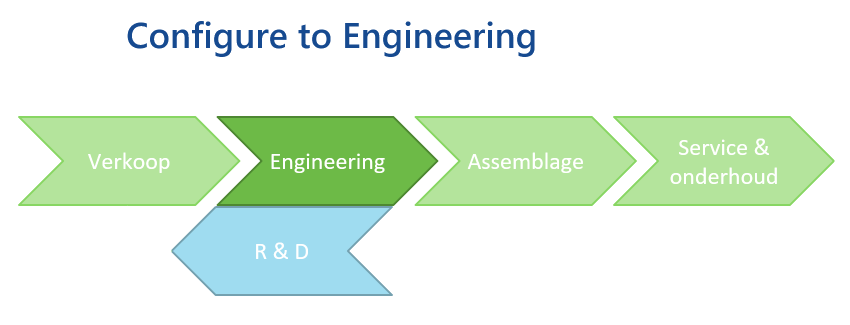
    Engineering to Order, Configure to Order, Configure to Assemble, Smart Customization … I would like to add a slogan to that: Configure to Engineering! Or Smart Engineering … or … or …

    In any case: somewhere between the delivery of a rock solid standard product and the super flexible handmade special, lies the ‘sweet spot’ for many companies. Flexible enough to be able to meet the customer, but standard enough to realize healthy business operations within the golden triangle of time-money-quality.

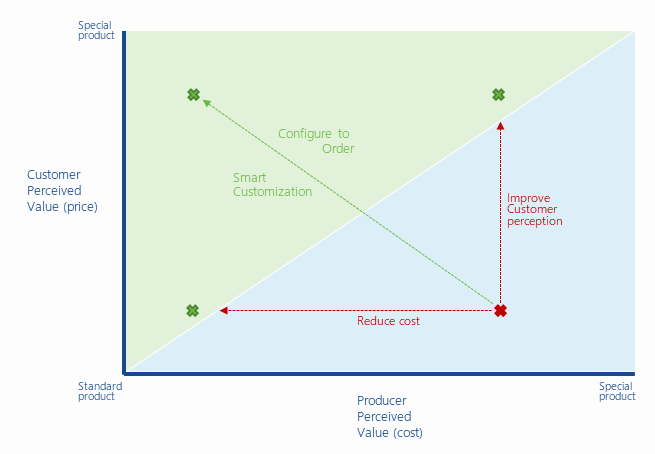
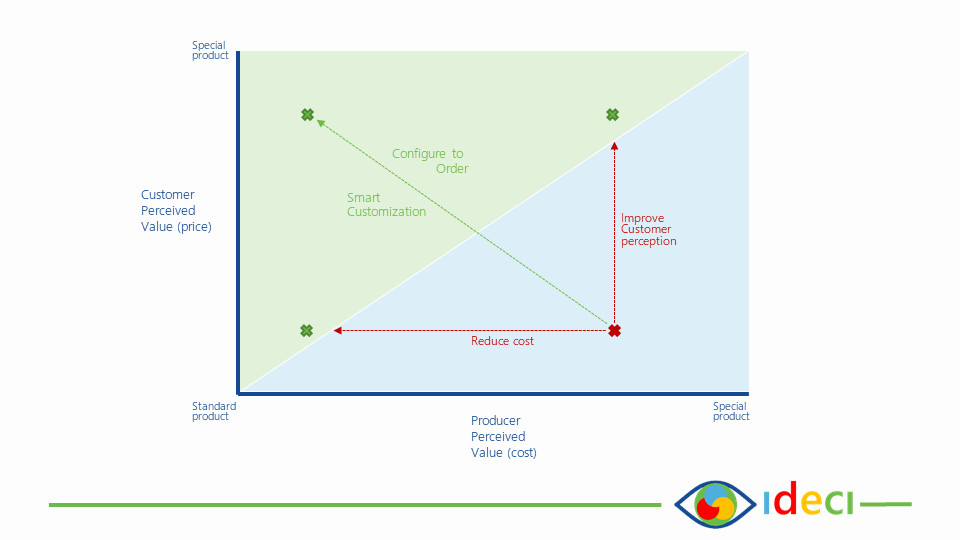
    After all, the laws of economics prescribe that the customer’s perception of product value must be greater than the effort made by the producer: otherwise it is difficult to make money … (the green area in the figure below).

    Modular products enable Configure to Order and Smart Customization. Both are ways to increase the margin between customer value perception and producer value perception.

    In the previous four parts I tried to clarify what modularity really is, how modular your product should be, what that means for managing all your product variants and how a product configurator can help with that.

    The problem I see is that people are frantically trying to adopt concepts from major car manufacturers while …

    … one is not a car manufacturer …

    … and don’t want to be. Simply because they do not make a product that will be produced in quantities similar to a car (they serve a far smaller market).

    And because one always wants to deliver in part a customer-specific product. Not only to satisfy the customer and outsmart the competition, but also because that is what drives their product innovation.

    And make no mistake about the successes of the car industry: recalls (www.terugroepregister.rdw.nl) are the rule rather than the exception. In addition, the sale and aftercare of their products is handled by dealers. They have contact with the customer. Customer wishes never arrive directly at Volkswagen’s R&D department. That distance is sometimes nice … but a luxury that most companies cannot afford. That machine that you recently delivered to Brazil cannot be recalled, so there is no other option than to put your engineer on the plane to solve the problem on site.

    The fact that car manufacturers can produce a car at a, in my opinion, ridiculously low price has everything to do with the volumes that they produce. And that has everything to do with the degree of automation in a modern car production line.

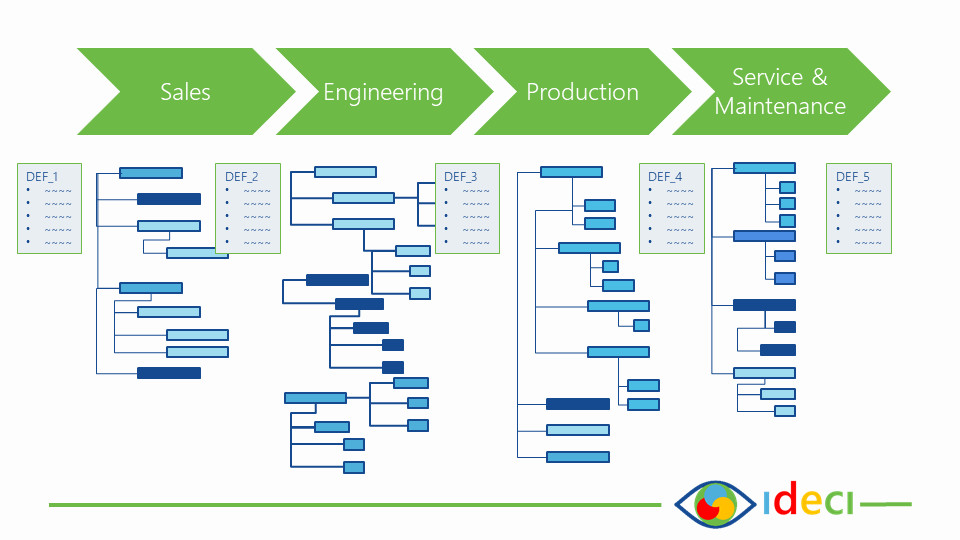
    My I view on engineering is similar. It is part of your production line: starting with sales and ending with serice and maintenance. And even if you have replaced your sales people with a sales configurator and web-shop, the production and assembly is carried out by robots and all service work is outsourced to third parties …

    … within the knowledge core of your company, where customer and customer market demand is translated by your engineers into a product, they still work according to traditional methods.

    I have a background in software engineering. There, the aim of standardization and modular construction is to reuse solutions, concepts … knowledge. The benefit is not so much in reducing costs, but in freeing up brainpower for new ideas that drive product innovation.

    If you also apply this approach to ‘physical’ technical disciplines such as electrical engineering and mechanical engineering, then the cost reduction in the material flow that goes with it is a ‘nice bonus’.

    However, that does not work the other way around: if cost reduction in the material flow is the goal of modular assembly, this does not automatically go hand in hand with an improvement in engineering efficiency. Unless you can afford to take engineering completely out of the value chain and, just like your great example, the car manufacturer, are able to produce 100% Configure to Order.

    If your bottleneck is no longer in the material flow, but in your engineering, and / or if the term Configure to Engineering at the top of this article has raised your interest, do not hesitate to make an appointment for further explanation.
    [/av_textblock]

    [av_social_share title=’Share this entry’ style=” buttons=” share_facebook=” share_twitter=” share_pinterest=” share_gplus=” share_reddit=” share_linkedin=” share_tumblr=” share_vk=” share_mail=” av-desktop-hide=” av-medium-hide=” av-small-hide=” av-mini-hide=” av_uid=’av-23mie3′]

  • EtO, CtO, Smart Customization

    EtO, CtO, Smart Customization

    [av_heading heading=’EtO, CtO, Smart Customization’ tag=’h3′ link_apply=” link=” link_target=” style=’blockquote modern-quote modern-centered’ size=’50’ subheading_active=” subheading_size=’15’ margin=” padding=’10’ color=’custom-color-heading’ custom_font=’#4fafdb’ custom_class=” id=” admin_preview_bg=” av-desktop-hide=” av-medium-hide=” av-small-hide=” av-mini-hide=” av-medium-font-size-title=” av-small-font-size-title=” av-mini-font-size-title=” av-medium-font-size=” av-small-font-size=” av-mini-font-size=”][/av_heading]

    [av_hr class=’default’ height=’50’ shadow=’no-shadow’ position=’center’ custom_border=’av-border-thin’ custom_width=’50px’ custom_border_color=” custom_margin_top=’30px’ custom_margin_bottom=’30px’ icon_select=’yes’ custom_icon_color=” icon=’ue808′ av_uid=’av-r7yyi’]

    [av_image src=’http://ideci.nl/wp-content/uploads/2018/04/Value-perception-crop.png’ attachment=’1384′ attachment_size=’full’ align=’center’ styling=” hover=’av-hover-grow’ link=” target=” caption=” font_size=” appearance=” overlay_opacity=’0.4′ overlay_color=’#000000′ overlay_text_color=’#ffffff’ animation=’no-animation’ admin_preview_bg=” av_uid=’av-6btjt6′][/av_image]

    [av_textblock size=” font_color=” color=” av-medium-font-size=” av-small-font-size=” av-mini-font-size=” av_uid=’av-40y84a’ id=” custom_class=” admin_preview_bg=”]
    In this article, I will explain the difference between Engineering to Order, Configure to Order and Smart Customisation from an engineering point of view.

    There are quite a few companies struggling in their quest for the balance between delivering and standardising customer specific solutions. After all, they want to satisfy the customer and outsmart the competitor, but at the same time achieve a healthy profit margin.

    There are companies that make excellent money with their Engineering to Order, project-based business operations. But who, for whatever reason, want to increase their margin in a more efficient way.

    Inspired by car manufacturers and IKEA, they then take the path of Configure to Order. Sometimes it works, sometimes it partially works, and sometimes it doesn’t work at all. This may have to do with the role and position of the engineering department, where the wishes of your customer are translated into an attractive solution, in the value chain.

    But first, for a better understanding, a brief overview of EtO, CtO and Smart Customization.

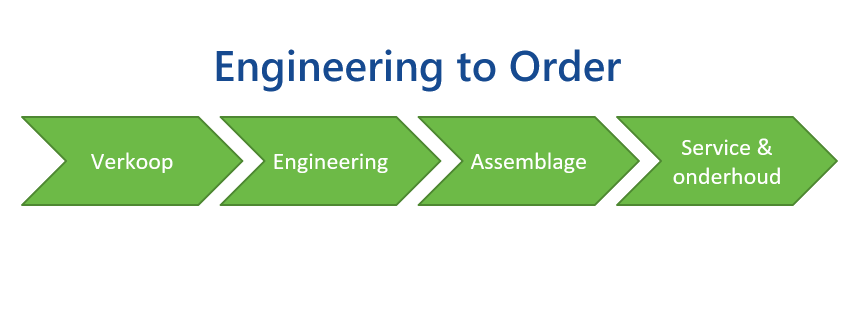
    At EtO, the engineering department is ‘in the chain’. All assignments (orders) are worked out by the engineering department to the level of detail required to build the installation or machine. All customer-specific requirements and wishes are translated into a solution that is largely tailor-made. All new concepts and innovations are developed in the projects. And of course, as one might expect, that brings along some technical, and therefore financial, risks.

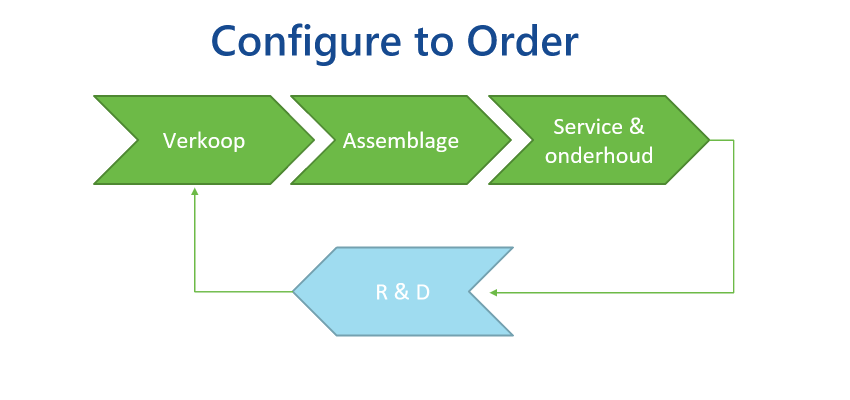
    With CtO, engineering has been removed from the operational chain and placed in a separate department, often referred to as Research and Development. But in fact still the group of people who translate customer / market demand into technical solutions. The big difference, however, is that this feedback from the chain follows a significantly longer route, and takes longer, than with an EtO company. And that’s fine if it can be allowed, or even is desirable, that innovations do not follow each other too quickly.

    Car manufacturers and IKEA are successful with this method. But one has to realise that the only way to meet a customer-specific wish in this way is by first supplying the product in accordance with the standard, and then adapting it to the customer’s specification. In practice this is so expensive that it is rarely done. If customer-specific adjustments are allowed during production, the CtO principle will fall apart and one will not enjoy the benefits.

    B

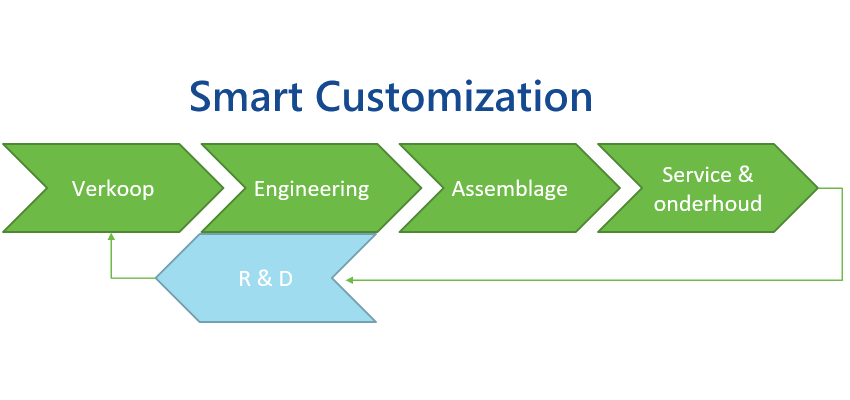
    Smart Customization is a term promoted by consultancy firm IPL. It’s an hybrid form where EtO is combined with CtO. Originated from the awareness that many companies get their competitive and innovative strength from the fact that they make customer-specific solutions.

    A sharp distinction is to be made between what is ‘standard’ and what is ‘special’. The standard part can be built according to CtO principles, the special part according to EtO principles.

    Sounds good? Too good to be true? Perhaps, because as always the case, with all technology, ‘the devil is in the detail’ still applies.

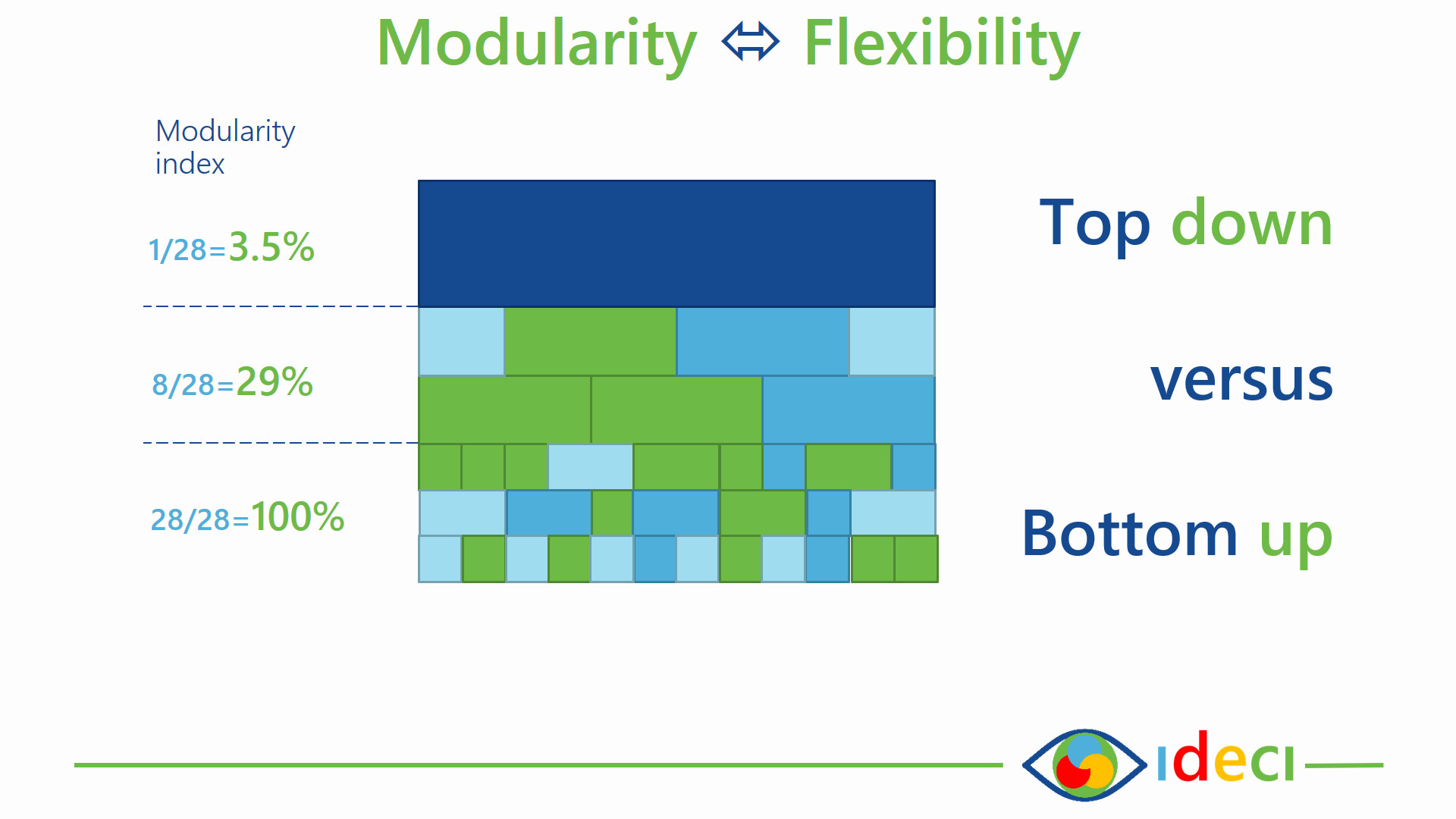
    To make Smart Customization possible, a different approach is required than with CtO. Especially when it comes to making a modular product structure. At CtO, the reasoning is often ‘top-down’, since the product, and all its variants, can be fully mapped out.

    With Smart Customization however, some part of the product is unknown: 5%? 10% 20% 50% is customer specific. And that requires a ‘bottom-up’ approach.

    Configure to Engineering is based on that principle: modules are built by combining the smallest standard parts to the level that is still covered by the standard. Sometimes it’s 50%, sometimes it’s 95%. The remainder is EtO.

    Want to learn more? Get in touch!
    [/av_textblock]

    [av_social_share title=’Share this entry’ style=” buttons=” share_facebook=” share_twitter=” share_pinterest=” share_gplus=” share_reddit=” share_linkedin=” share_tumblr=” share_vk=” share_mail=” av-desktop-hide=” av-medium-hide=” av-small-hide=” av-mini-hide=” av_uid=’av-36ujru’]

  • Modularity for dummies, part IV

    Modularity for dummies, part IV

    [av_heading heading=’Modularity for dummies, part IV’ tag=’h3′ link_apply=” link=’manually,http://’ link_target=” style=’blockquote modern-quote modern-centered’ size=’50’ subheading_active=” subheading_size=’15’ margin=” margin_sync=’true’ padding=’10’ color=’custom-color-heading’ custom_font=’#4fafdb’ av-medium-font-size-title=” av-small-font-size-title=” av-mini-font-size-title=” av-medium-font-size=” av-small-font-size=” av-mini-font-size=” av_uid=’av-kgqobgz6′ id=” custom_class=” admin_preview_bg=”][/av_heading]

    [av_hr class=’default’ height=’50’ shadow=’no-shadow’ position=’center’ custom_border=’av-border-thin’ custom_width=’50px’ custom_border_color=” custom_margin_top=’30px’ custom_margin_bottom=’30px’ icon_select=’yes’ custom_icon_color=” icon=’ue808′ av_uid=’av-5nzzuf’]

    [av_image src=’http://ideci.nl/wp-content/uploads/2018/04/LEGO-Mindstorm-box.png’ attachment=’1457′ attachment_size=’full’ align=’center’ styling=” hover=’av-hover-grow’ link=” target=” caption=” font_size=” appearance=” overlay_opacity=’0.4′ overlay_color=’#000000′ overlay_text_color=’#ffffff’ animation=’no-animation’ admin_preview_bg=” av_uid=’av-4wap2f’][/av_image]

    [av_textblock size=” font_color=” color=” av-medium-font-size=” av-small-font-size=” av-mini-font-size=” av_uid=’av-2z99rb’ id=” custom_class=” admin_preview_bg=”]
    In the previous part we learned how, by offering more variants and applying control technology and software, the complexity of products continues to increase. Even LEGO cannot escape this: see LEGO Mindstorms (a programmable robot) in the image above this article.

    It also turned out that modularity can hide this complexity, but it does not simplify it. And we learned that modularity mainly offers advantages for sales, logistics, production and service.

    Engineering will always have to control complexity down to the smallest detail.

    Denying complexity in the sales phase bounce back . . . up on the desk of engineering. This is the well-known ‘gap’ between sales and engineering; two worlds that don’t always seem to understand each other.

    Imagine the frustration when it turns out that the LEGO box you just bought doesn’t contain the correct blocks to build the robot pictured on the front!! An expectation that cannot be met….. Or … you have to wait a longer for the delivery … because LEGO still has to find the right blocks together ….

    There are several ways to prevent this. Ideally, you remove engineering entirely from the supply chain. Just like car manufacturers and IKEA do. That works fine for large volumes of products with a long innovation cycle of several years. Product development and innovation then takes place in a separate R&D department.

    With smaller volumes and continuous product development, one cannot avoid having engineering to work in closely cooperation with sales, production and service. Every new customer request can initiate an innovation and contribute to the further development of the product. But how do you ensure that sales and engineering know how to find each other?

    Setting up a product configurator is a good way to close the gap between sales and engineering.

    After all, a few important questions need to be answered when setting up a product configurator:

    1. what is the product we make? Which parts is it made up of?
    2. how do we make the product? How are the parts assembled into one whole?
    3. which products do we sell? Which variants do we want to offer?
    4. why customers want our products? Which functionalities have added value?

    Configurator software can be used as a means of getting these questions answered. Questions 1 and 2 can be answered by your engineers and questions 3 and 4 by your sales people.

    Product configurators are on the rise because product suppliers want to satisfy the customer and still want to keep the number of product variants under control. All (technically) possible and (business-economically) desirable combinations are defined within the product configurator.

    You don’t have a product configurator for your product? Then you might wonder; how and by whom, and at what point in your value chain, it is determined which product variants are possible and permitted?

    Try playing with an IKEA kitchen configurator, already picking out your new car or order a T-shirt with your own print. Most applications of product configurators are to support the sales process.

    Perhaps that is the reason that in practice, despite the use of a product configurator, the gap with engineering is still not closed. In such a case I see things go wrong on a number of points:

    1. the output of the sales configurator leaves room for interpretation; the level of detail is insufficient (modularity index <100%) and leaves room for ‘creative’ interpretation by engineering or production departments.
    2. the modularity is good enough to cover the variants in the sales brochure, but does not correspond to the actual product structure.
    3. the output of the sales configurator is incomplete; for example, produces the mechanical Bill of Materials only. Software and electrical parts are not taken into consideration.

    In all cases we see a mismatch here between the product model as seen by sales and the product model as seen by engineering. Because of this, something goes wrong in the information transfer … and someone will have to fix that.

    Some companies are already a bit further and have managed to link their sales configurator to the product configurator of the engineering. In this way a seamless transfer of information can be achieved.

    In the next part I will try to come to a nice conclusion … because we can write 100 more articles about modularization!
    [/av_textblock]

  • Modularity for dummies, part III

    Modularity for dummies, part III

    [av_heading heading=’Modularity for dummies, part III’ tag=’h3′ link_apply=” link=’manually,http://’ link_target=” style=’blockquote modern-quote modern-centered’ size=’50’ subheading_active=” subheading_size=’15’ margin=” padding=’10’ color=’custom-color-heading’ custom_font=’#4fafdb’ custom_class=” id=” admin_preview_bg=” av-desktop-hide=” av-medium-hide=” av-small-hide=” av-mini-hide=” av-medium-font-size-title=” av-small-font-size-title=” av-mini-font-size-title=” av-medium-font-size=” av-small-font-size=” av-mini-font-size=”][/av_heading]

    [av_hr class=’default’ height=’50’ shadow=’no-shadow’ position=’center’ custom_border=’av-border-thin’ custom_width=’50px’ custom_border_color=” custom_margin_top=’30px’ custom_margin_bottom=’30px’ icon_select=’yes’ custom_icon_color=” icon=’ue808′ av_uid=’av-73of5c’]

    [av_image src=’http://ideci.nl/wp-content/uploads/2018/04/lego-storage-tray-unit.jpg’ attachment=’1458′ attachment_size=’full’ align=’center’ styling=” hover=’av-hover-grow’ link=” target=” caption=” font_size=” appearance=” overlay_opacity=’0.4′ overlay_color=’#000000′ overlay_text_color=’#ffffff’ animation=’no-animation’ admin_preview_bg=” av_uid=’av-6652n4′][/av_image]

    [av_textblock size=” font_color=” color=” av-medium-font-size=” av-small-font-size=” av-mini-font-size=” av_uid=’av-4jv5y8′ id=” custom_class=” admin_preview_bg=”]
    In Part II, we discovered that products are becoming increasingly complex, regardless of the number of modules. This time we’re going to talk about the manageability of that complexity.

    Let’s see what the relationship is between an option offered, a product variant, its complexity and modularity.

    Suppose your product does not have any options and is available in all colors as long as it is black. It probably won’t be long until you meet a potential buyer who loves the product … but … only in yellow. And like any salesperson, you want to ‘please’ the customer and say ‘agree!’. And with that the first option and choice is born.

    The sales brochure now contains the following options and variants:

    Your product develops further in response to market demands.

    With a 2nd option the number of variants doubles from 2 to 4. With the 3rd option it doubles again.

    Well, I’ve kept it simple: each option is an ‘either-or’ choice from 2 options. And all options can be combined with each other. In practice, this is often not the case: for example, there is a choice of several colors and some options cannot be combined. But this example makes it clear that the number of variants quickly explodes to a number that can hardly be calculated.

    How does a modular product structure help manage all those variants? Well … actually…it doesn’t

    … because any way you slice it, an option will work through on to the level of detail at which engineers work. For example, it may happen that what started as a simple customer request, and appeared to be only a small variation on a previous embodiment, turns out to have a significant impact on the design. And with that also on production, logistics and service, lead time, price, etc. ‘The devil is in the detail’ certainly applies to even the simplest looking technical products.

    The fact that people are sometimes surprised by this is because the actual, complex product structure has not been mapped out at most companies. All LEGO bricks are, just like in the past, in our living room, scattered across the various departments. They are in 3D CAD designs, electrical schematics and software code.

    But because these blocks are not tangible (just chunks of information), no one will be annoyed by the clutter or trip over it. Until … people do stumble over it.

    “But doesn’t a modular product structure offer advantages?” Yes, but those benefits are different for everyone:

    • Sales: modules for providing choices to the customer
    • Logistics: modules for simplifying the material flow
    • Production: modules for parallel production and production outsourcing
    • Engineering: modules for reuse of solutions (and knowledge)
    • Service and maintenance: modules for fast interchangeability

    A modular construction can hide the complexity, but it cannot reduce it.

    Your engineers still need to know in detail how each module is structured and how they relate to each other. Only your most experienced employees will know what inter-dependencies there are and how these blocks can be combined; they are the master builders (in every company you will find a number of these heroes).

    The only way to manage complexity is to make it transparent.

    And that requires a multi-disciplinary, integrated approach. Call it Systems Engineering, Integrated Project Delivery, BIM, PLM … but you will have to describe what your product is, how it is built, which variants you sell or plan to sell.

    To what level of detail should this be done? That depends on your ambitions: do you want to reuse knowledge and engineering solutions or are you satisfied with logistical advantages? Up to component level or are coarse modules sufficient? Modularity index 100% or 1%?

    And don’t underestimate it: the product you have been making and selling for years turns out to be more complicated than you thought!

    Next time we will highlight product structure and modularity from the different perspectives of sales, engineering, production and service.
    [/av_textblock]

    [av_social_share title=’Share this entry’ style=” buttons=” share_facebook=” share_twitter=” share_pinterest=” share_gplus=” share_reddit=” share_linkedin=” share_tumblr=” share_vk=” share_mail=” av-desktop-hide=” av-medium-hide=” av-small-hide=” av-mini-hide=” av_uid=’av-2ol6lc’]

  • Modularity for dummies, part II

    Modularity for dummies, part II

    [av_heading heading=’Modularity for Dummies, part II’ tag=’h3′ link_apply=” link=’manually,http://’ link_target=” style=’blockquote modern-quote modern-centered’ size=’50’ subheading_active=” subheading_size=’15’ margin=” padding=’10’ color=’custom-color-heading’ custom_font=’#4fafdb’ custom_class=” id=” admin_preview_bg=” av-desktop-hide=” av-medium-hide=” av-small-hide=” av-mini-hide=” av-medium-font-size-title=” av-small-font-size-title=” av-mini-font-size-title=” av-medium-font-size=” av-small-font-size=” av-mini-font-size=” av_uid=’av-2rahze’][/av_heading]

    [av_hr class=’default’ height=’50’ shadow=’no-shadow’ position=’center’ custom_border=’av-border-thin’ custom_width=’50px’ custom_border_color=” custom_margin_top=’30px’ custom_margin_bottom=’30px’ icon_select=’yes’ custom_icon_color=” icon=’ue808′ av_uid=’av-7nav8r’]

    [av_image src=’http://ideci.nl/wp-content/uploads/2018/04/LEGO-Duplo.jpg’ attachment=’1452′ attachment_size=’full’ align=’center’ styling=” hover=’av-hover-grow’ link=” target=” caption=” font_size=” appearance=” overlay_opacity=’0.4′ overlay_color=’#000000′ overlay_text_color=’#ffffff’ animation=’no-animation’ admin_preview_bg=” av_uid=’av-lekbf’][/av_image]

    [av_textblock size=” font_color=” color=” av-medium-font-size=” av-small-font-size=” av-mini-font-size=” av_uid=’av-3hrf8b’ id=” custom_class=” admin_preview_bg=”]
    In Part I we ended with the question “How big should the blocks be?” Just like with LEGO, there are pros and cons to large and small blocks. We also read that one large, monolithic block is nice and simple, but has its limitations in the number of variants.

    Two laws of LEGO apply:

    LEGO’s 1st Law states: the more blocks, the more variants you can build.

    LEGO’s 2nd Law states: the bigger the blocks, the faster you can build.

    It can be divided into modules in various ways. Top-down, or bottom-up. To understand this, one must view the product, the installation or machine as an assembly of separate parts.

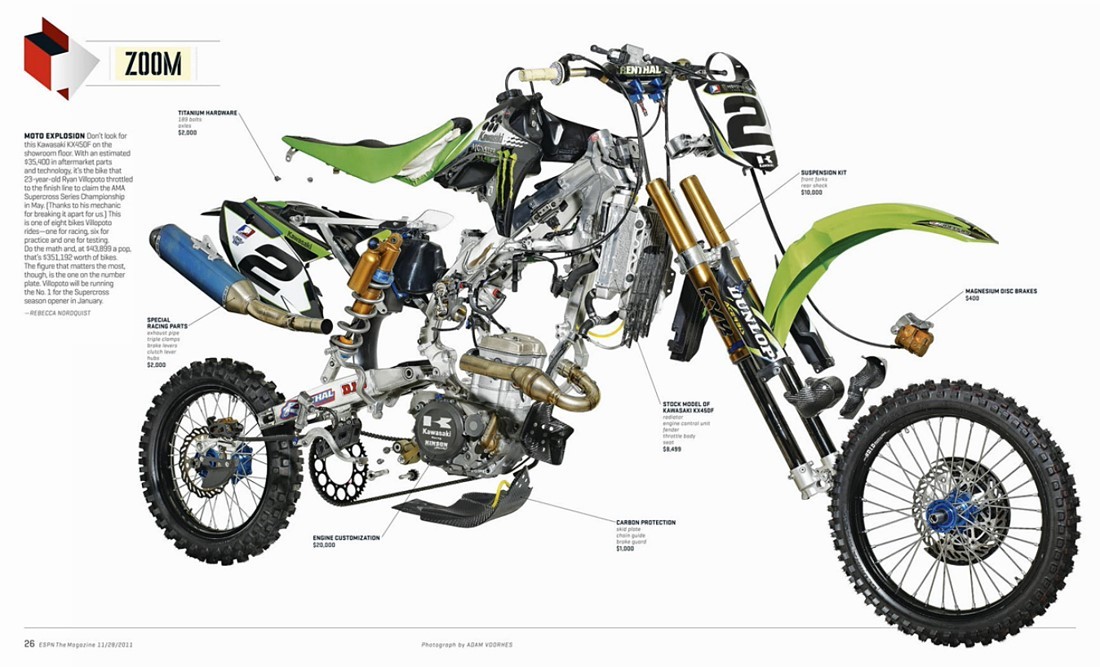
    In the most extreme top-down approach, one sees the whole motorcycle as one module (like the Part I company). In the most extreme bottom-up approach, each separate part is seen as one module.

    To get an idea of how modular the product actually is, I use the modularity index. Very simply the number of modules divided by the total number of parts, expressed as a percentage.

    Imagine that the motorcycle in our example is made up of 1000 separate parts. But we ‘keep it simple’ and distinguish 20 modules. The modularity index is then 20/1000 x 100% = 2%.

    With a low index you have few, but more complex modules: after all, each module contains a relatively large number of parts.

    With a high index you have many, but simple modules: each module contains only a limited number of parts. The complexity then lies in the mutual cohesion and dependencies. There are undoubtedly smart minds who can calculate for you how many combinations are possible with 1, 20, 100 or 1000 building blocks.

    Large blocks hide a lot of complexity. That makes it tempting to stick to a rough modular layout. Life is complicated enough. Leave that to the R&D and engineering departments …

    This denial of complexity comes back on your plate somewhere, downstream in the value chain.

    There are also smart people who say “I make one big ‘smart’ block with all kinds of options so that I can realize all variants very quickly.” Especially popular in the software discipline. Sound like a good idea? Yes … at first, but not later. And that has to do with manageability. We will talk about that in Part III.

    To keep it simple, I have limited myself to physical, tangible parts so far. Most companies that build modular only focussed on the mechanical parts. As a result their Bill of Materials (the parts list that is central in their ERP system) has become modular. In this way, they mainly achieve logistical benefits.

    It is apparently assumed that the options that a customer chooses, and the product variants that result from them, can be traced back to physical parts. Often without the electrical parts, let alone parts that are not tangible. At a time when software is increasingly gaining a share in the ‘customer value’, this is of course no longer the case.

    You read a lot about the increasing complexity of products. Especially because people are starting to realise the above. A Bill of Materials is still rather straight forward, compared to modular or non-modular structures in software. In addition, all those different structures appear to be interconnected and have dependencies (“Yeah dude!”). It will drive you crazy! But indeed, it can no longer be denied.

    However many or few modules you have, your product is more complex than you thought!

    In part three, we’re going to talk about managing complexity.
    [/av_textblock]

    [av_social_share title=’Share this entry’ style=” buttons=” share_facebook=” share_twitter=” share_pinterest=” share_gplus=” share_reddit=” share_linkedin=” share_tumblr=” share_vk=” share_mail=” av-desktop-hide=” av-medium-hide=” av-small-hide=” av-mini-hide=” av_uid=’av-2x8tq3′]

  • Modularity for dummies, part I

    Modularity for dummies, part I

    [av_heading heading=’Modularity for dummies, part I’ tag=’h3′ link_apply=” link=’manually,http://’ link_target=” style=’blockquote modern-quote modern-centered’ size=’50’ subheading_active=” subheading_size=’15’ margin=” margin_sync=’true’ padding=’10’ color=’custom-color-heading’ custom_font=’#4fafdb’ av-medium-font-size-title=” av-small-font-size-title=” av-mini-font-size-title=” av-medium-font-size=” av-small-font-size=” av-mini-font-size=” av_uid=’av-kgp3xqcj’ id=” custom_class=” admin_preview_bg=”][/av_heading]

    [av_hr class=’default’ height=’50’ shadow=’no-shadow’ position=’center’ custom_border=’av-border-thin’ custom_width=’50px’ custom_border_color=” custom_margin_top=’30px’ custom_margin_bottom=’30px’ icon_select=’yes’ custom_icon_color=” icon=’ue808′ av_uid=’av-5g8pr2′]

    [av_image src=’http://ideci.nl/wp-content/uploads/2018/04/LEGO-piraten.jpg’ attachment=’1359′ attachment_size=’full’ align=’center’ animation=’no-animation’ styling=” hover=’av-hover-grow’ link=” target=” caption=” font_size=” appearance=” overlay_opacity=’0.4′ overlay_color=’#000000′ overlay_text_color=’#ffffff’ av_uid=’av-3n7jce’][/av_image]

    [av_textblock size=” font_color=” color=” av-medium-font-size=” av-small-font-size=” av-mini-font-size=” av_uid=’av-1zjwj2′ id=” custom_class=” admin_preview_bg=”]
    Under pressure from the market and their competitors, machine builders, but actually every system developer, are looking for ways to stretch and compress the ‘magic triangle’. In other words: deliver higher quality in a shorter time at a lower cost price. Money-time-quality are inextricably linked in this triangle.

    ‘Modularity’ is a often coined as a solution that offers a way out of the entrapment of the magic triangle.

    Maybe it is. But what is modularity really?

    I remember a visit to a machine builder with a product portfolio of about 10 different machines. They were successful, partly thanks to the modular construction of their machines, in their opinion.

    During the tour of the factory, we held still in front of one of their, rather impressive, products. Quite a complex combination of mechanical, pneumatic, hydraulic, electrical and (invisible) software parts.

    When I asked how this machine was built in a modular way, after some back-and-forth-and-past-each other I came up: this was 1 (one) module! …. with many options. Ah …

    In fact, their portfolio of 10 different product lines had just as much modules. Well, at least that keeps things clear and comprehensible. Such as a LEGO construction box of a pirate ship, where the content consists of 1 large LEGO block … in the shape of a pirate ship.

    This is what I call monolith standardization or ‘maximum model’ standardization. A bit like Henry Ford in the early years of the automotive industry: the Model T was available in one variant, in all colors as long as it was black.

    And just like Henry Ford, you can be quite successful with that.
    Until the competitor starts offering your customers more variants, options.

    For a while all goes well, by adding all kinds of options. But the number of variants that you can make and maintain in this way is limited.

    Car manufacturers, IKEA and more and more machine builders have recognised this problem. They build ‘modular’.

    Modular building means that you give your (LEGO) building blocks such a size that you can build all current (and expected future) variants by combining the blocks into a larger whole.

    But how big or small should those blocks be? LEGO Duplo or Technic? It is so easy to build with large blocks. Small blocks make it so flexible. We will talk about that in Part II. Because somewhere in between lies the best solution for you.
    [/av_textblock]

  • On Systems Architecture Principles & Practices

    On Systems Architecture Principles & Practices

    Attended a INCOSE seminar yesterday, on systems architecture. James N Martin shared his wealth of knowledge and experience in aerospace system development.

    New insights I’ve learned:

    • systems architecting is even less known than systems engineering
    • architecting is not only about the technical system
    • environmental, political, social, economical requirements also impact architectural design
    • architecture provides the bridge between  a company’s mission and the products it delivers
    • enterprise architecture provides a ‘framework’ that constrains the solution space
    • system architecture provides a ‘framework’ that constrains and supports the engineering solution
    • models are needed to develop system architecture
    • there are many ways (views) to look at system architecture, all serving different purposes

    I also noticed that there are quite a few concepts that came across from software development where system architecture and modelling (e.g. using UML) is more established.

    Modelling (e.g. using SysML) is being promoted within systems engineering as the way to go. Now if your working for NASA like companies like James does, you might be granted the time, budget and people to pull this off. But in many other cases it might be very difficult to find and convince sponsors within your company to get this going. Especially since it requires a strategic, long term view plus persistence to reap the benefits.

    If you believe in, or can no longer deny, the digitization trend, the only way to go forward is to model whatever product you deliver. Read my posts on that subject: your Company s next Top Model

    Alltogether: Systems Architecting is not new but only very few companies are aware of this aspect of system development. Of course all existing systems do have architecture, and it has emerged and evolved in a gradual manner. But next time when you consider your ‘next generation’, ‘new platform’, ‘extended product range’, it might be a good idea be more aware of what needs actually drive and shape the solution you want to offer to your customers.  Systems Architecting does exactly that.

    Want to learn more about Systems Engineering? Check out the Systems Engineering Concept.

  • your Company’s next Top Model, part III

    your Company’s next Top Model, part III

    [av_heading heading=’your Company’s next Top Model, part III’ tag=’h3′ style=’blockquote modern-quote modern-centered’ size=’50’ subheading_active=” subheading_size=’15’ padding=’10’ color=’custom-color-heading’ custom_font=’#4fafdb’ av-medium-font-size-title=” av-small-font-size-title=” av-mini-font-size-title=” av-medium-font-size=” av-small-font-size=” av-mini-font-size=” admin_preview_bg=”][/av_heading]

    [av_hr class=’default’ height=’50’ shadow=’no-shadow’ position=’center’ custom_border=’av-border-thin’ custom_width=’50px’ custom_border_color=” custom_margin_top=’30px’ custom_margin_bottom=’30px’ icon_select=’yes’ custom_icon_color=” icon=’ue808′]

    [av_image src=’http://ideci.nl/wp-content/uploads/2018/04/hollands-next-top-model-3.png’ attachment=’1536′ attachment_size=’full’ align=’center’ styling=” hover=’av-hover-grow’ link=” target=” caption=” font_size=” appearance=” overlay_opacity=’0.4′ overlay_color=’#000000′ overlay_text_color=’#ffffff’ animation=’no-animation’ admin_preview_bg=”][/av_image]

    [av_textblock size=” font_color=” color=” av-medium-font-size=” av-small-font-size=” av-mini-font-size=” admin_preview_bg=”]
    In the previous parts we introduced the world of models, what they are, how they look like, why they are important and how they relate to Smart Industry 4.0 .

    In this last episode we’ll choose your favourite model. But first we’ll have a look at the stage where these models have to put on their show; your company’s IT-landscape. It probably resembles the picture below:

    Which might look a bit worrying … on the other hand … I think this is the situation in a majority of the companies. The IT-landscape has grown along with the company. Note the hand-holding-pencil-, foot step-, email- and telephone-icons in the diagram above? That’s all human interaction.

    In most companies a majority of the employees work as a information processing resource.

    Now, each of these business software solutions and databases contain a part of your company’s models. Only a part, because the rest of the model is in the heads of your employees or in some ‘analogue’ form like hand written papers, sheets, sticky notes and so on.

    Though many people within your company use one or more of the business software solutions, there are only very few people, if any at all, that have a notion of the models that are hidden within. Unless you have identified roles like ‘Business process analyst‘ , ‘System/product architect‘ (or similar) that have mapped the process and product models.

    To choose your favourite model, this is what you’d have to do:

    1. Determine the reason why your company exists at all. The thing that, if you take it out, the rest of the company has no purpose. Maybe the product you develop or manufacture? Maybe the production technology? Maybe a small team of experts that provide services? This is the ‘holy grail’ of your company. This is the object of affection for your competitors.
    2. Ask your self: where is / who has the knowledge about the ‘holy grail’? If it is in the head of one person, you can think of a few good reasons to model that knowledge. If it is dispersed among tens of people, meaning no one really knows, the same applies. You might even build a knowledge-system based on that model and, in doing so, secure, expose and unlock the ‘holy grail’.
    3. Imagine what it would be if the holy grail was exposed and within reach for everybody(within your company … not your competitor). The bigger the benefits, the bigger the effort you can allow yourself. Model it! Digitize it! And take a leap in to the future(which is not so far away as you might think). Or wait … until the competition does.

    If there is more than one candidate, choose the one that looks ‘easy’. And even then, remember that

    it is OK to think big and be ambitious but make sure to act small … and learn fast!

    If you need any help with that, just give me a call.

    [/av_textblock]

    [av_social_share title=’Share this entry’ style=” buttons=” share_facebook=” share_twitter=” share_pinterest=” share_gplus=” share_reddit=” share_linkedin=” share_tumblr=” share_vk=” share_mail=” av-desktop-hide=” av-medium-hide=” av-small-hide=” av-mini-hide=”]

  • your Company’s next Top Model, part II

    your Company’s next Top Model, part II

    [av_heading heading=’your Company’s next Top Model, part II’ tag=’h3′ style=’blockquote modern-quote modern-centered’ size=’50’ subheading_active=” subheading_size=’15’ padding=’10’ color=’custom-color-heading’ custom_font=’#4fafdb’ av-medium-font-size-title=” av-small-font-size-title=” av-mini-font-size-title=” av-medium-font-size=” av-small-font-size=” av-mini-font-size=” admin_preview_bg=”][/av_heading]

    [av_hr class=’default’ height=’50’ shadow=’no-shadow’ position=’center’ custom_border=’av-border-thin’ custom_width=’50px’ custom_border_color=” custom_margin_top=’30px’ custom_margin_bottom=’30px’ icon_select=’yes’ custom_icon_color=” icon=’ue808′]

    [av_image src=’http://ideci.nl/wp-content/uploads/2018/04/hollands-next-top-model-2.png’ attachment=’1535′ attachment_size=’full’ align=’center’ styling=” hover=’av-hover-grow’ link=” target=” caption=” font_size=” appearance=” overlay_opacity=’0.4′ overlay_color=’#000000′ overlay_text_color=’#ffffff’ animation=’no-animation’ admin_preview_bg=”][/av_image]

    [av_textblock size=” font_color=” color=” av-medium-font-size=” av-small-font-size=” av-mini-font-size=” admin_preview_bg=”]
    Last time on ‘your Company’s next Top Model’ I explained how models play a part in Smart Industry 4.0. Even when you’re not aware, they help you digitize your business. Smart models, huh?

    In Part II you’ll get introduced to the models, you can have a glimpse on what they look like and learn about their ambitions to make this world a better place! If you’re a manager and think this is all too technical or theoretical for you… better bite the bullet and read on if you want to understand what’s coming your way on the path to digitization and Smart Industry 4.0.

    There are two categories: problem domain models and solution domain models (note: ‘problem domain’ and ‘solution domain’ seen from your perspective, meaning your solution might be someone else ‘s problem…).

    Within these domains there are two main types of models: structural and behavioural models.

    Let’s try this on your company, assuming it provides solutions to fulfil customers needs:

    • market segmentation: structural model in problem domain
    • customer purchase forecast: behavioural model in problem domain
    • organization chart: structural model in solution domain
    • resource planning: behavioural model in solution domain

    Notice the ‘simulation’ ring around the behavioural model? That’s were things become really interesting. The examples above are all ‘static’. Simulation adds dynamic to the model, making it possible to observe its behaviour, predict it, validate it, compare it with real life events. Predictive algorithms on big data simulate the near future. How do you think the weather forecast is produced? The latest thing is … computers that simulate humans: Artificial Intelligence.

    Let’s do another example, on the product this company makes; sheet metal processing equipment.

    • sheet metal 3D CAD model: structural model in problem domain
    • sheet metal finite element analysis model: behavioural model in problem domain
    • sheet metal processing equipment 3D CAD model: structural model in solution domain
    • sheet metal processing equipment timing diagram: behavioural model in solution domain

    This is, in short, what a ‘Digital Twin’ is made of.

    So we have seen structural models and behavioural models, both in the problem domain as well as in the solution domain. On top of that, models have a character as well.

    There are

    • the elementary physical models: to set the boundaries of what is possible
    • the creative conceptual models: to bring you new ideas
    • the practical implementation models: to support you in the real world

    Example

    Note that the ‘solution space’, e.g. the number of possible solutions ‘covered’ by the model, decreases as your model becomes more practical. This is due to constraints; limitations that are imposed on them. Where the physical model is only limited by laws of physics, the implementation model takes all requirements, functional and non-functional (the ‘-abilities’), into account.

    The shape of things in real life is determined by constraints.

    Your company can produce the product it makes in many different ways. But constraints have narrowed down the solution space. Market demands and expectations on quality, delivery time and costs have shaped your company. Aesthetical, economical and technological boundaries shaped the product.

    Also note that when models become more practical, they become larger, more complex, more detailed. To a point that they contain, or can produce, sufficient information to close the gap with the real world. It takes quite some effort to reach that level but the benefits will be felt in every day, real life, operation.

    You have reached the point were Smart Industry 4.0 really starts off!!

    Here lies a challenge: the more practical your company (culture) is, the more complex the needed models are. Do you, your colleagues have the skills to build them?

    Watch this space: next time I’ll help you to choose your next Top Model!

    If you can’t wait to learn more, just give me a call => ideci
    [/av_textblock]

    [av_social_share title=’Share this entry’ style=” buttons=” share_facebook=” share_twitter=” share_pinterest=” share_gplus=” share_reddit=” share_linkedin=” share_tumblr=” share_vk=” share_mail=” av-desktop-hide=” av-medium-hide=” av-small-hide=” av-mini-hide=”]